Within the demanding arena of modern professional drifting, victory is not merely exclusively a product of brute engine power or pilot courage. Rather, it has evolved into a intricate discipline that requires a painstaking fusion of selecting a proven vehicle platform, arming it with the highest-quality drift-spec hardware, and, most importantly, understanding its real-time behavior on the track through sophisticated suspension tuning applications. This comprehensive guide functions as your blueprint starting from the initial idea of a competition vehicle right through to the final telemetry-optimized adjustments that transform a strong car into a consistent champion. We will examine in detail the precise engineering of vehicle alignment optimization, demonstrating how a advanced drift tuning app like a dedicated telemetry system eliminates guesswork and offers exceptional clarity into your car's true dynamics.
The cornerstone of any great competitive sliding vehicle is, undoubtedly, the chassis itself. Several cars have achieved renowned reputation within the global oversteer scene due to their built-in balance, strong build quality, and the immense ecosystem of specialist support available. Picking the correct car is the primary and most important choice a driver will make. As an example, the BMW E36 is commonly accepted as perhaps the the best balanced drift platforms of history. Its near-perfect balanced front-to-rear weight, combined with a rear-wheel-drive configuration and extremely reliable inline-six engines, creates a car that is both forgiving for novices and incredibly effective in the possession of a pro competitor. The successor of this lineage, the BMW E46 platform, improves on these strengths with a increasingly refined frame, increased track for greater high-speed stability, and even more steering angle straight from the OEM. Another powerful option in the pro circuit is the Chevrolet Corvette C6.
This muscle-derived sports car brings a distinctive combination of advantages to the sliding sport, including a light aluminium frame, a rear-mounted gearbox and differential unit that contributes to an ideal front-to-rear mass ratio, and the immense low-end power of a large-displacement LS V8 motor. This combination makes it an utter monster on track, designed of starting and maintaining long slides with apparently minimal application of acceleration. For those desiring outstanding performance per dollar, the Nissan Z33 rises above as a prime choice. It comes from the manufacturer with a rigid chassis, a decent OEM locking differential, and the free-revving VQ series powerplant that provides ample power and torque for mastering and progressing in the sport. Its newer version, the Nissan 370Z, offers further refinements in chassis stiffness, steering geometry, and overall engine performance, establishing its position as a popular selection among competitive pilots. Additional legendary platforms that warrant mention include the agile Wankel-engined Mazda FC RX-7, the ubiquitous Nissan S13 240SX, the American SN95 generation Mustang, the modern BMW E90, and the tiny yet unbelievably engaging and teachable MX-5 Miata. Each of these cars provides a unique set of traits, complexities, and capabilities, but they all possess the fundamental elements essential to be transformed into a competitive sliding vehicle.
However, selecting the optimal chassis is just the beginning. To release the true capability of every of these vehicles, substantial changes to the steering system and chassis control systems are absolutely mandatory. This is where the world of precision tuning parts becomes vital focus. The one most transformative modification for a purpose-built competition vehicle is the installation of a drift-spec angle modification kit. These sophisticated systems, such as those developed by performance brands like specialist manufacturers, are designed to dramatically enhance the car's possible lock-to-lock rotation. A OEM street car is severely restricted in how far its steering tires can rotate, a design trade-off for public road operation. In sliding, but, aggressive steering input is frequently needed to manage and maintain a slide. An angle kit replaces the factory steering knuckles, tie rods, and sometimes control arms with components that permit the steered wheels to attain steering lock beyond 70 or even 80 °, versus a average OEM angle of around 40 to 50 °.
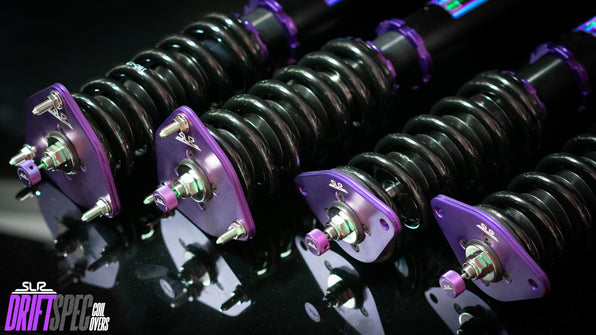
This tremendously increased capability gives the pilot with exponentially more authority during a slide, allowing it to be far more straightforward to begin a drift, sustain it through a long corner, and transition smoothly from one angle to the other. The contrast in drivability is nothing short of revolutionary. Paired with a appropriately specified modification is the every bit as vital upgrade to the car's spring and damper setup. Generic or including premium street dampers are generally not engineered for the unique and extreme requirements of drifting. A dedicated system of adjustable dampers is paramount. These engineered dampers have specific piston tuning and spring stiffness that are designed for the rapid mass transition that is inherent of aggressive driving. When a pilot begins a slide, the chassis's weight is shifted forcefully to the front of the corner. Correct drift-spec dampers handle this movement in a predictable way, allowing the car to find its balance quickly and providing the operator clear feel through the controls and driver's seat. They additionally enable precise setting of ground clearance, damping rate, and cross-weight, which are all key parts of optimizing the chassis's dynamics to a given venue or competition style. As a system, a precision-engineered drift angle kit and a correctly chosen pair of drift-spec adjustable dampers are the absolute mechanical base upon which all later refinement is based.
Once the core components is in place, the following vital stage in the project is the meticulous adjustment of the vehicle's wheel angles. This is the realm of chassis dynamics adjustment, a methodology that can feel daunting to the uninitiated but is, in fact, the defining factor to turning a collection of fast parts into a cohesive and predictable whole. The most debated element of tuning for oversteer is definitely negative camber. Wheel camber is the tilt of the rim compared to the perfectly straight plane when looked at from the front-on of the vehicle. If the top edge of the tire is angled inward, this is known as negative camber. In oversteer driving, inward-leaning wheels on the front axle wheels is universally employed and is considered essential. The reason is deeply tied to physics.
When a vehicle is going around a bend at extreme angles, the chassis tilts toward the outer of the corner. This chassis roll makes the outer steering tire to lose its optimal footprint with the track surface. By introducing inward lean, the wheel is pre-tilted to compensate for this roll. As the chassis tilts into the turn, the tire gains a better contact patch on the road surface, optimizing its traction at the critical time when it is needed most for control. Usually, front adjustments for a dedicated sliding vehicle vary from approximately -3 degrees to as much as -5 degrees or even more, contingent on the specifics of the vehicle setup, rubber choice, and pilot preference. The back wheels also employ inward tilt, but the settings are typically less and less aggressive than the front. Overly aggressive negative camber at the back can make the car extremely loose and challenging to control on throttle application, as it diminishes the usable contact patch of the powered tires during straight-line throttle application. Therefore, rear adjustments are frequently in the ballpark of -1 degree to -3 degrees, striking a careful equilibrium between providing adequate cornering bite to assist in entering and holding the slide while simultaneously keeping effective grip for exiting the corner. camber angle is merely one component of the more complex alignment puzzle, which additionally involves toe, caster angle, and suspension-induced steering correction.
Toe refers to the direction of the tires when looked at from a bird's-eye view. Positive toe means the leading edges of the tires are closer together than the rear edges, while outward toe means the converse. For drifting, a small amount of front toe out is commonly employed to sharpen the turn-in steering response, making the car feel more nimble and willing to begin a oversteer moment. Rear axle toe setting is usually set to neutral or a extremely small amount of positive toe to foster straight-line stability under power. self-centering is the frontwards or backwards angle of the kingpin axis when looked at from the side-on of the car. Increased positive caster enhances self-centering and stability confidence, and it additionally adds to camber increase during turning, which is very advantageous. Adjusting these values is a detailed dance where a modification to a single parameter can and will impact the others. The conventional process for setting a chassis's suspension geometry for drifting has for a long time been a time-consuming affair of experimentation and feeling. A pilot or crew would make a adjustment based on a hunch, test the chassis on track, depend on the driver's individual perception and comments, and then introduce an additional tweak. This loop would continue over and over until the car felt "acceptable" or the scheduled testing time ended. This system is not just exceptionally wasteful in terms of time and costs, but it is additionally fundamentally flawed.
Driver sensation is a infamously unreliable metric, influenced by numerous factors such as tiredness, changing track grip levels, temperature, and just the focus of the driver on that given day. What feels "oversteery" on one pass might feel "understeery" on the subsequent lap, causing confusing data and frustrating tweaks. This age-old limitation in vehicle dynamics optimization is exactly where state-of-the-art engineering tools has made its mark to completely change the methodology.
The advent and integration of advanced vehicle dynamics tools has brought about a new age for tuning and optimizing high-performance drift cars. These platforms, represented by cutting-edge systems like GripDial, operate by actively measuring the real-time mechanical performance of the vehicle as it is piloted on the circuit. As opposed to using driver feedback, these devices acquire objective information on critical variables such as damper compression and extension, corner velocities, acceleration forces, steering angle, and throttle and brake input. This acquired telemetry is then interpreted by sophisticated applications that can graph and analyze the data in a clear manner. For the first time, drivers and crews can observe exactly what the car is exhibiting at any given moment of a drift. This capability transforms the complete chassis setup procedure. Think about the specific challenge of dialing in the front camber for a particular vehicle. As an alternative to introducing a modification from -3 degrees to -3.5 degrees and then running several runs to try and "feel" a improvement, a vehicle dynamics tool can provide immediate and definitive feedback. The tool can display graphically how the suspension's grip is behaving during the key stages of a drift: turn-in, holding the angle, and transition. It can reveal if the existing value is enabling the outside front tire to keep ideal grip or if the compound is over-stressed on its external edge.
The software can then provide data-driven suggestions for modification. Perhaps the telemetry reveals that the tire is still overworking its outer shoulder at -3.5 degrees of negative camber, implying that even more negative camber, say -4 degrees, might be advantageous. Conversely, the information might indicate that the tire is not coming up to optimal operating temp or that the inside edge is degrading excessively, which could point to that there is too much inward lean and a slight decrease back to -3.2 degrees would be more ideal. This standard of precision and practical analysis was car suspension tuning simply impossible in the era of exclusively manual adjustment.
The impact of using a dedicated suspension tuning tool reaches far beyond just setting camber. It becomes an priceless damper adjustment manual that is tailored to your exact vehicle. When setting the damping settings on your adjustable dampers, rather than using vague tips or replicating another team's setup, you can use the software to analyze how the chassis is behaving in relation to your tweaks. The software can show the suspension travel trace over a lap, revealing if the shocks are handling the weight transfer properly or if they are permitting the chassis to oscillate uncontrollably after a transition. It can help in identifying challenges like excessive compression or topping out, allowing you to introduce data-backed adjustments to spring preload, damping settings, or ground clearance. This methodology translates just as well to the intricate process of suspension geometry optimization. Beyond camber, the system can provide insight into how modifications to toe settings and caster are affecting the car's stability during different maneuvers of a lap. For instance, it can allow you to find the optimal amount of front negative toe for your particular angle kit configuration and driving style by showing the response time of turn-in response and the consistency of the car at lock lock. This turns the tool an incredibly powerful vehicle dynamics manual that is actively informed by the live dynamics of your own car on the circuit. It moves the complete process from a dark art into a scientific optimization procedure.
Furthermore, the value of a tool like modern telemetry is not restricted to experienced tuners with vast resources. For the club-level driver, it functions as an incredible force multiplier. It practically provides the driver with the analysis of a professional suspension specialist without requiring the typical expense. It accelerates the tuning process by delivering definitive solutions to questions that would normally take years of experimentation to understand. A builder can see car alignment tuning how their particular vehicle responds to specific inputs, developing a more intuitive knowledge of suspension theory in the journey. It also democratizes advanced performance tuning concepts, enabling every enthusiast with the ambition to refine their machine to accomplish it in a structured and effective way. This is especially significant in a activity like drifting, where setup know-how has traditionally been a highly secretive asset among elite crews. In the modern era, that knowledge can be in the hands of any serious builder.
In conclusion, the journey to engineering and tuning the ultimate championship-contending drift machine is a comprehensive mission that smoothly integrates proven mechanical wisdom with 21st-century telemetry technology. It commences with the strategic selection of a proven chassis, then enhanced by the installation of essential competition components like maximum-angle steering angle kits and correctly specified competition suspension units. The build then moves into the precision stage of car coilover setup tips suspension tuning, where parameters like camber, toe, and caster are meticulously set to complement the chassis's modified hardware and the driver's specific technique. Ultimately, and what truly distinguishes the modern process from the traditional methods, is the adoption of a advanced drift telemetry software. This tool eradicates the uncertainty and inefficiency of only feel-based tuning by delivering quantifiable, actual telemetry on how the chassis is truly performing. It serves as an incredible engineering partner, a definitive drift suspension tuning guide, and a comprehensive vehicle dynamics tool. As a complete package, this integrated methodology leads to that each and every aspect of the drift machine—from the selection of the car to the final click on the coilover—is optimized for ultimate competitiveness on the track. It signifies the full progression of the discipline of drifting, bridging physical driving skill with surgical suspension engineering to build the perfect competitive machines attainable.